

#57: Meet Daniel Lim: the Singaporean Building an AI Education Startup in Vietnam
How a young Singaporean's heart for social issues led him to build an AI-powered education platform to democratize education for one billion children

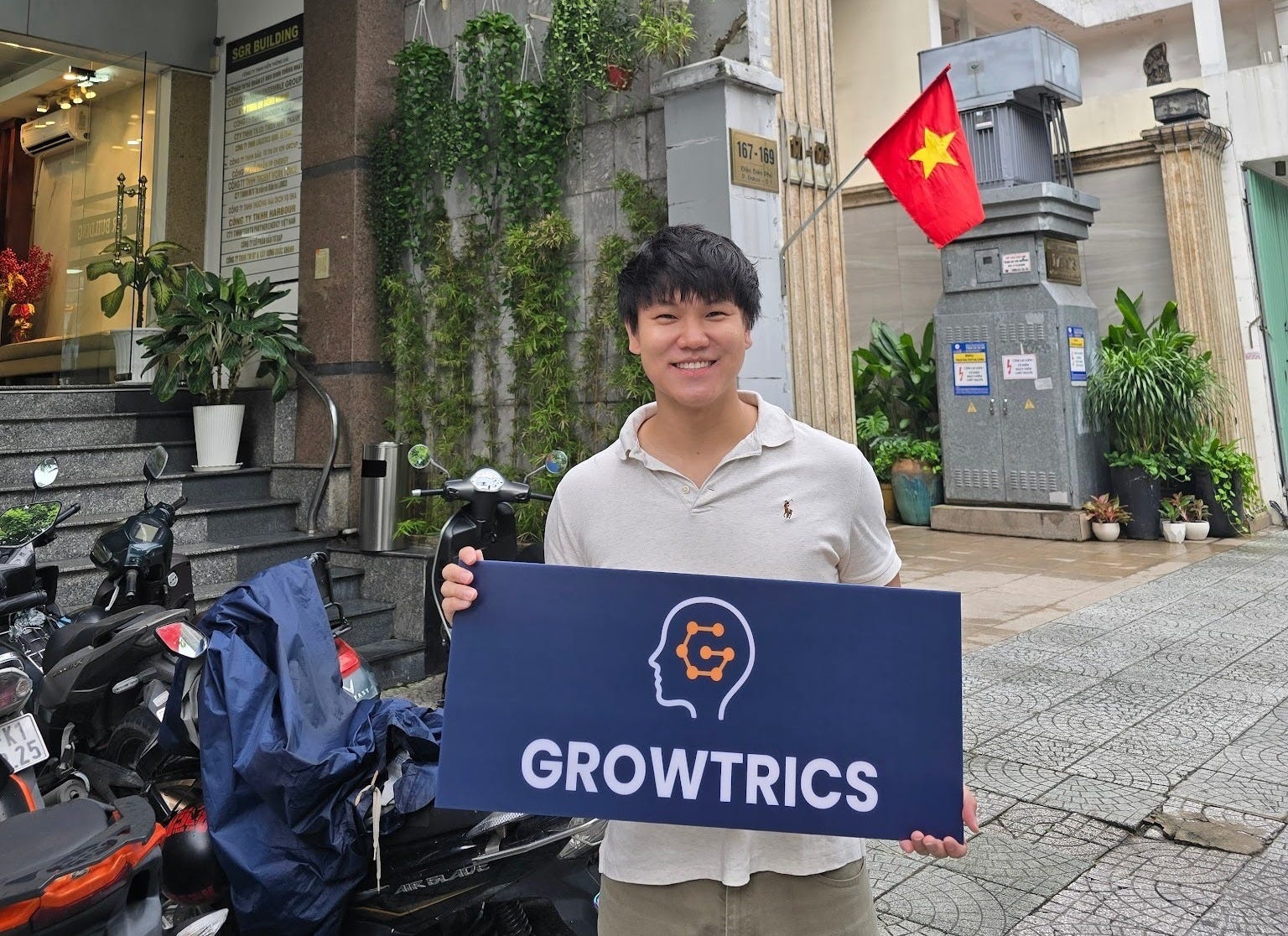
For 27-year-old Daniel Lim, his journey to becoming a founder of an AI-powered education platform stems from his heart for social issues.
Growing up, this young Singaporean embarked on several mission trips to neighboring Southeast Asian countries for community programs and volunteering camps, which involved students from several schools in Singapore.
After joining such programs for two to three years, Daniel wondered if there was anything he could do organically. That led him to start his own volunteer camp with some friends, and what happened next surprised him.
More than 120 students signed up for the camp.
“I thought I was just doing it with a few friends,” he says.
With that, Daniel and his friends began to organize more camps and fundraising concerts, which eventually led to a decision to register their ground-up initiative as an official society called Team Ardor.
That’s when the Singaporean government recognized his efforts and decided to send him overseas as a youth ambassador to spread awareness for education by teaching at schools and meeting fellow community leaders in Myanmar and Chiang Mai.
While Daniel and his team tried to sustain their program through donations, they quickly realized that it wasn’t working out financially. This realization spurred Daniel to embark on a quest to build a sustainable business model while staying true to his heart for education.
But I wondered, what made Daniel so passionate about education?
Early Beginnings
“I think education has always been in our family’s DNA,” Daniel explains.
He drew inspiration from his mother, who gave tuition to earn additional income for her family, even though she grew up living in a rented one-bedroom flat with her family members.
“I always think that education is something at heart that we use to try and share with other people the knowledge that we have,” he says.
Meanwhile, Daniel grew up at a time when Singapore’s education system had become more established.
“I think Singapore is very good at focusing on pedagogy,” he says. “The NIE (National Institute of Education)—which is a teachers’ training institute—actually looked into gamification and the flipped classroom approach to enhance the teaching & learning experience.”
In contrast, Daniel discovered that schools in Yangon or rural Chiang Mai adopt a one-way, top-down teaching method while running programs there. It was also challenging to control the quality of teachers who volunteered to teach children there, as they may not fully commit to the program.
“So I thought, what can we do to create a system that can be end-to-end, and covers all parts of education? How can we bring Singapore’s way of pedagogy to more people?” Daniel wondered.
These experiences and questions would eventually lead to the start of Growtrics.

Building Growtrics
When I asked Daniel about it, he explained that Growtrics is an AI-powered education platform that supports all kinds of learners—from fast and slow learners to students with learning deficiencies like ADHD.
Although it is powered by AI, he emphasized that Growtrics is not an education company chasing technology, but rather a tech company in pursuit of education.
The platform aims to support learners with school work and provide automated assessment and feedback by analysing their handwritten work. Students can also engage in a conversation with the system to get help on understanding their mistakes or difficult concepts.
But Growtrics isn’t just for learners—the platform would also benefit teachers since it allows them to allocate more time to maintaining interpersonal relations with their students rather than juggling with administrative tasks.
Daniel also believes in the importance of the human touch in education. While technology could create a fast, efficient, and advanced learning environment, teachers are still required to help support and manage students on a personal level.
“When it comes to adopting changes with technology, we can’t blindly adopt it, but we also have to understand it and change our management process,” he says.
From Singapore to Vietnam
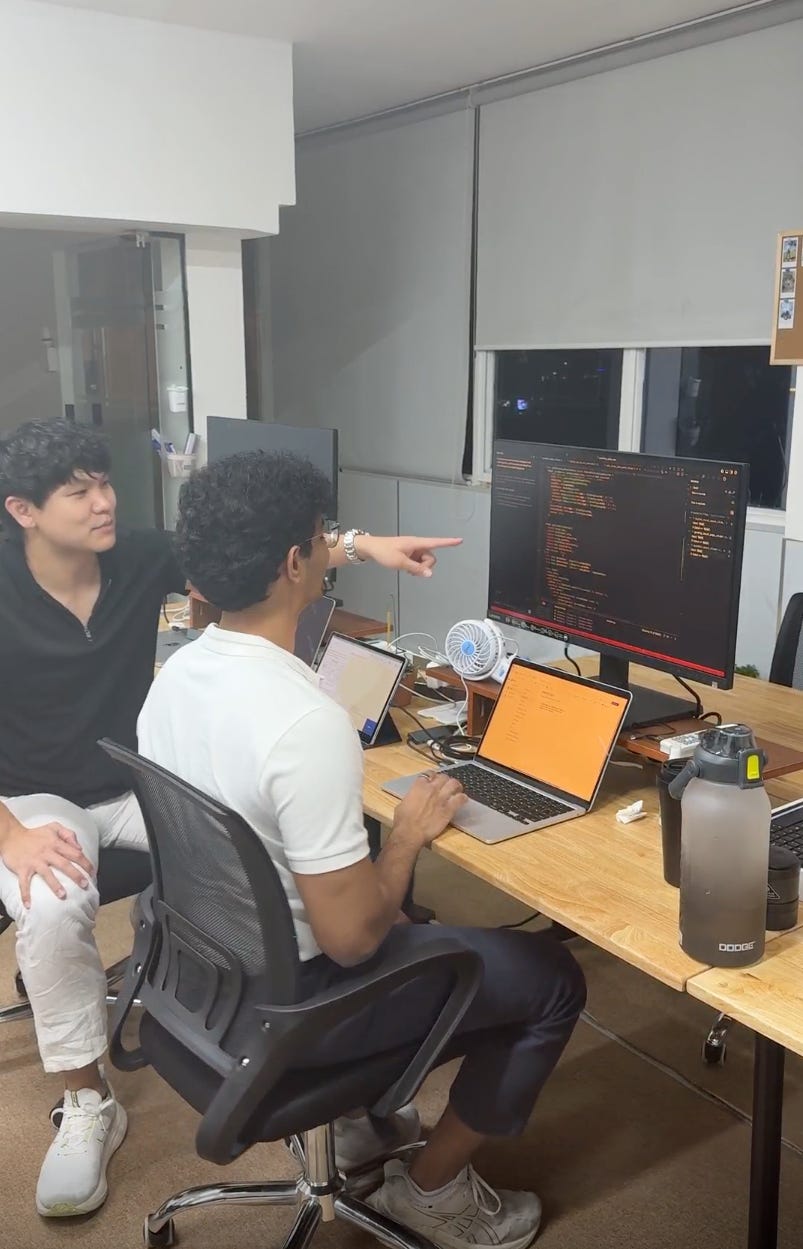
But what intrigued me further was: Why did Daniel choose to build Growtrics in Ho Chi Minh City, Vietnam?
“It was about familiarity,” he explains.
During his time running Team Ardor, Daniel travelled to Vietnam frequently, and it felt like a home away from home. The sense of familiarity has enabled him and his team to focus on building Growtrics, which reduced the need to overcome distractions if he were to build in other places as foreign as Silicon Valley.
That’s not to say that there aren’t cultural differences between Singapore and Vietnam.
“In Vietnam, English proficiency here is not the highest in the region, and we certainly struggled with communicating with our Vietnamese counterparts,” Daniel notes. “But we learned to use different ways to communicate with them, and their standard of English also improves over time”.
Despite that, he shared that Ho Chi Minh City has a very vibrant startup culture.
Beyond the buzzing startup ecosystem that draws in Y Combinator-backed companies and regional tech talent, the city runs on an energy that’s hard to find elsewhere. There’s a sense of genuine encouragement that makes building and hustling feel less isolating.
Not to mention, the local government is fully supportive of tech advancements, which paved the way for business policies that benefit emerging companies.
“There’s an eclectic group of people that allows you to get a diversified view of things, whether it is tech knowledge or people,” he says. “And here, you get a lot of people who are a little more encouraging or positive.”
By diving deeper into the city’s riveting landscape, Daniel found insights that could improve and boost the presence of Growtrics as the solution towards enhancing the learning experience for learners.
For early founders looking to operate in uncharted markets, learning to navigate its social nuances is just as important as understanding its business landscape.
For example, Daniel noticed that building relationships with the right people tends to get things done faster. “It’s so different from Singapore because we are so used to a queue system,” he quipped.
The Bigger Challenge Ahead
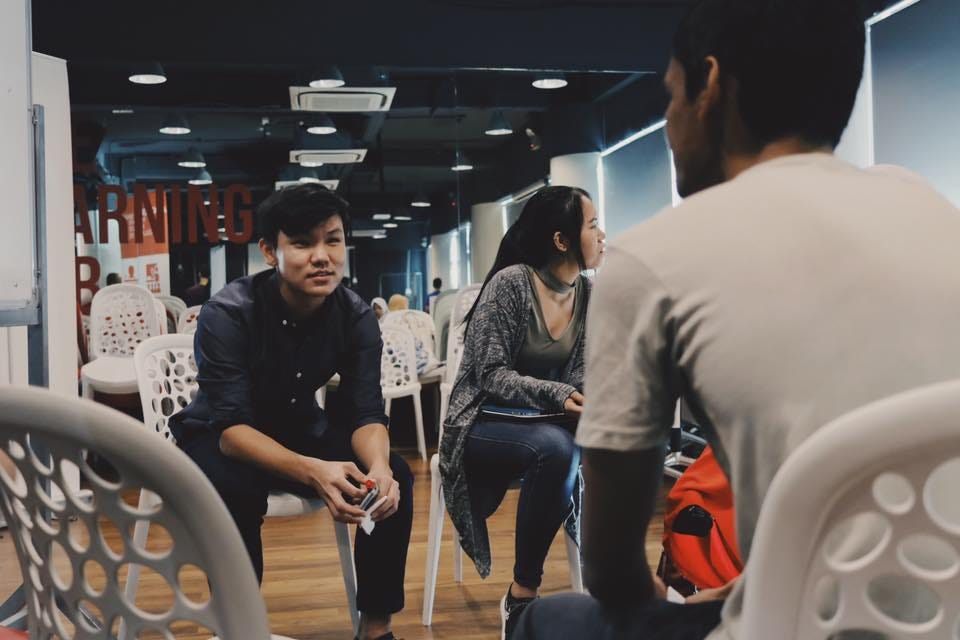
Growtrics’ mission to democratize education for one billion children may sound grand, but perhaps the bigger challenge that Growtrics faces isn’t just about scale — it’s also about relevance.
In a world where social media vies for every moment of attention, making education accessible is only half the battle. The real challenge is making learning compelling again for people to genuinely choose it.
Having spent years working across Southeast Asia, Daniel has also become more aware of how uneven access to education can be across the region — but also how much untapped potential exists.
For him, building Growtrics isn’t just about technology, but about expanding what’s possible for learners beyond Singapore.
His belief is simple: where you grow up shouldn’t determine how far you can go.
“Learning shouldn’t just be dependent on whether there’s a school nearby. Learning shouldn’t be dependent on whether you have money. But it’s the fact that you have a proper learning system,” he says.
With that, Daniel reminds us that the true measure of democratizing education isn’t just in making it accessible, but also in building something enduring enough to serve every kind of learner, wherever they are in the world.
Enjoyed today’s article? Follow SEAmplified on Instagram, TikTok, and LinkedIn for more exciting and exclusive content, hit the subscribe button, and tell us how we did in the poll below!
Have a new idea or lead for a story, feedback on our work, or just want to say hi? Email us at hello@seamplified.com.